
Full silicone
Silicone body and silicone head configurations form the core of the current range, supporting detailed painting, molded surface texture and model-specific internal lightweight structures.
Age verification
This website contains information and imagery related to adult TPE and silicone dolls. You must be at least 18 years old to continue.
Your confirmation is stored only in this browser.
Brand profile
Silicone-focused dolls with lightweight body engineering, advanced gear skeleton systems, detailed surface texturing and extensive configuration options.
Affiliate link. We may earn a commission from qualifying purchases at no additional cost to you.

01 / Brand overview
Founded in 2019, Starpery develops realistic full-size dolls with a strong emphasis on silicone construction, evolving internal skeletons, weight-reduction engineering and detailed surface finishing.
The company’s 2026 anniversary history traces its lightweight construction from an earlier second-generation system to current references to generation 4.2. That progression sits alongside changes in joint design, physical body texture and model-level customization.
02 / Body systems
Starpery’s current catalogue is led by full-silicone bodies, while selected listings and option documentation also describe TPE bodies and hybrid combinations with a silicone head. The exact material route depends on the chosen body and head.
Silicone body and silicone head configurations form the core of the current range, supporting detailed painting, molded surface texture and model-specific internal lightweight structures.
TPE body configurations remain documented for compatible models. Material, body painting and available mechanical options should be confirmed for the exact listing.
Starpery describes hybrid builds as a silicone head paired with a TPE body. Head compatibility and the available body specification vary by configuration.
Lightweight cores, softer outer layers and filling choices are not identical across every product. Current listings should be treated as the source of truth for a selected body.
03 / Lightweight engineering
Starpery’s WR4.0 documentation describes a dual-mold foaming process that forms the outer body and an internal lightweight structure around the skeleton. The goal is to reduce mass while preserving a supportive frame and a softer exterior.
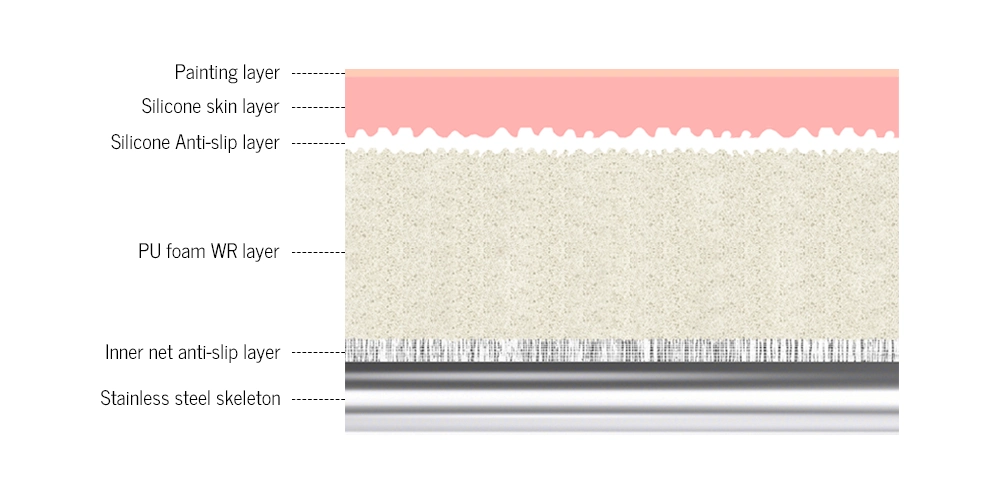
WR4.0 and the newer 4.2 label
WR4.0 is the generation described in Starpery’s technical process article. Newer navigation and selected current catalogue references use the 4.2 label. The latter should be understood as a newer generation offered on selected models, not as a blanket specification for every Starpery body.
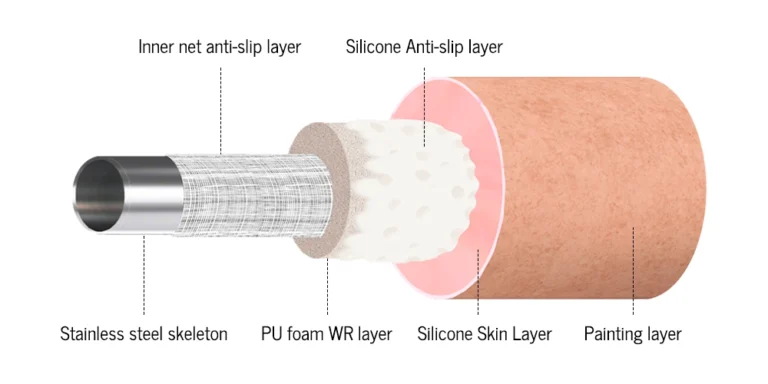
04 / Internal engineering
The current gear-based frame changes several key articulation points. Starpery’s published system covers the neck, waist, elbows, hands, thighs and feet, with each area using a more developed joint structure than the earlier silver frame shown by the manufacturer.
A ball-style universal joint supports rotation and multidirectional positioning.
Separate rotation and geared movement support turning, forward-backward positioning and lateral adjustment.
Updated elbow and hand structures extend the range of controlled positions.
Revised thigh and foot assemblies add movement at the hips, ankles, arches and toes.
Video feature
The demonstration shows the frame’s practical posing range across the neck, shoulders, arms, waist, hips and feet. Movement still needs to stay within the resistance and limits of the selected body.
05 / Frame comparison
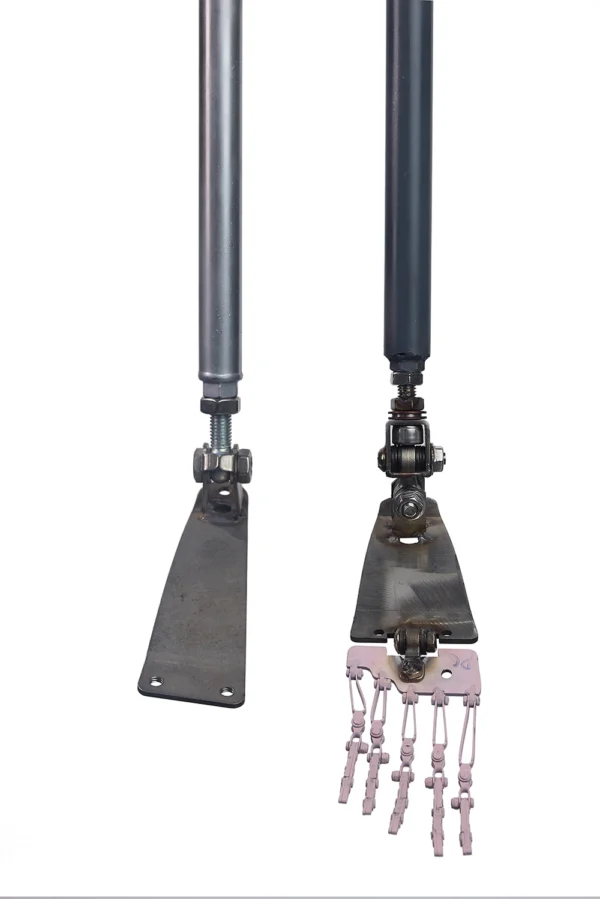
The earlier silver frame uses a simpler joint layout. The newer dark frame visibly adds gear assemblies and more articulated structures at the neck, waist, elbows, hands, thighs and feet.
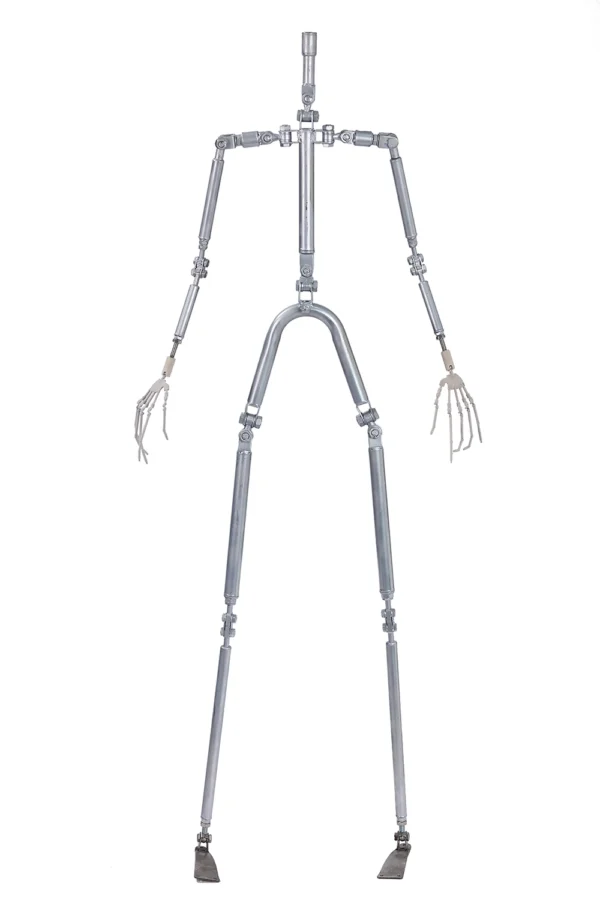
Simpler joint assemblies and plate-style feet.
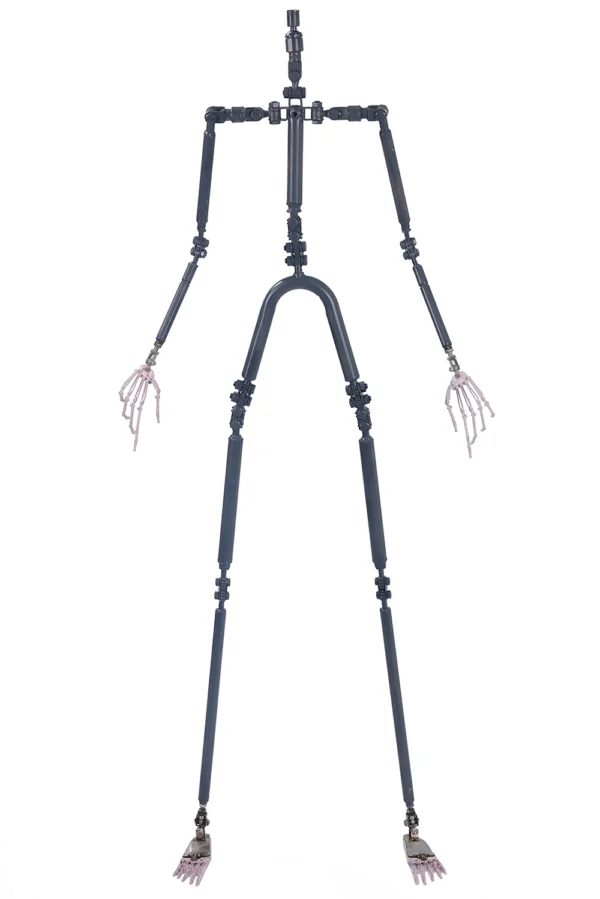
Expanded articulated and gear-based joint structures.
06 / Core articulation
The universal neck joint is designed for rotation across multiple planes. At the torso, a rotating waist works with a geared assembly for forward, backward and lateral positioning without implying unrestricted human-equivalent motion.
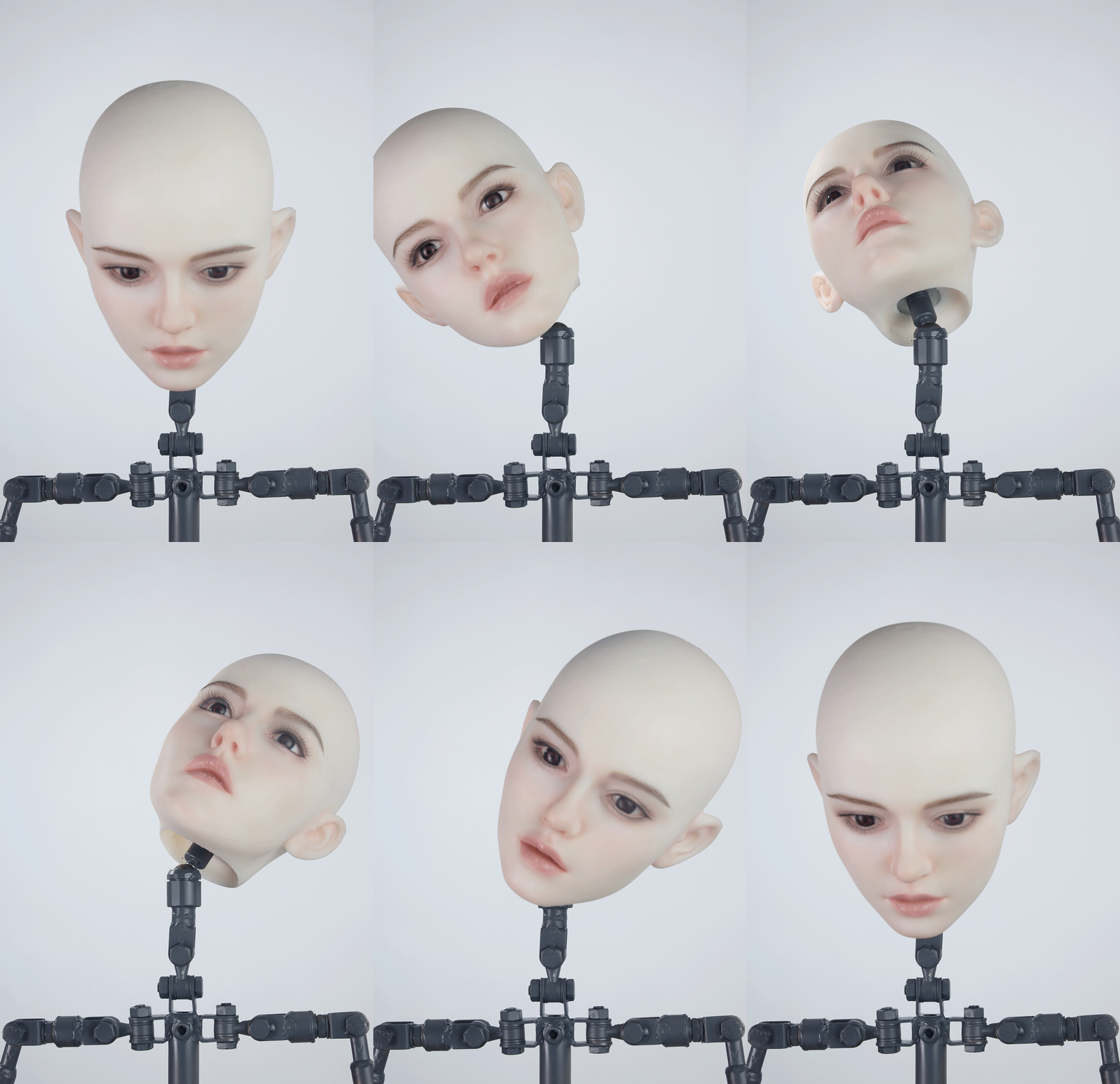
Animated demonstration
The ball-style upper joint adds rotation and angled positioning above the shoulder assembly.
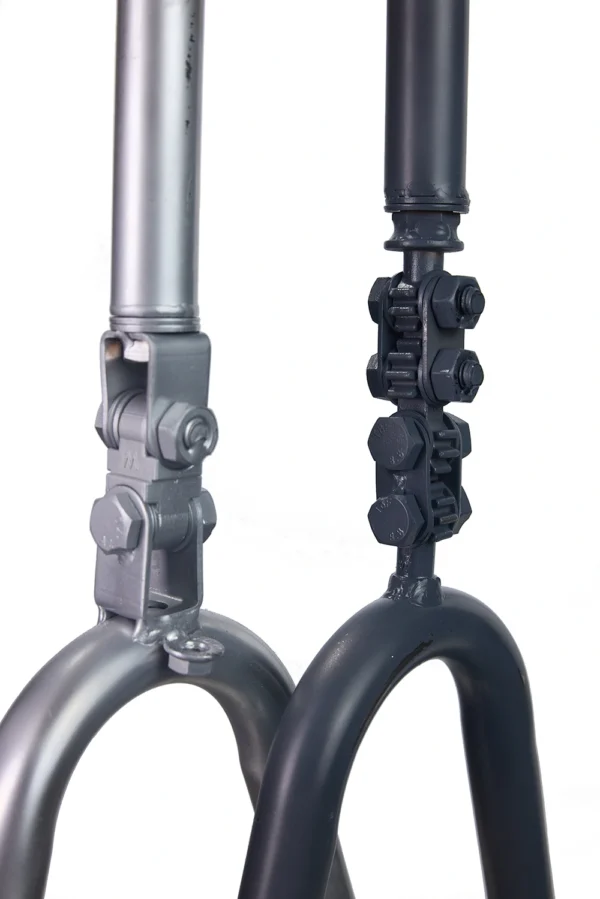
Gear assembly
The newer waist combines axial rotation with geared front-back and side-to-side adjustment.
07 / Limb mechanics
Reworked elbow and thigh joints expand the available posing range through additional rotational and geared movement. Practical motion remains bounded by the skeleton, outer material and selected body.
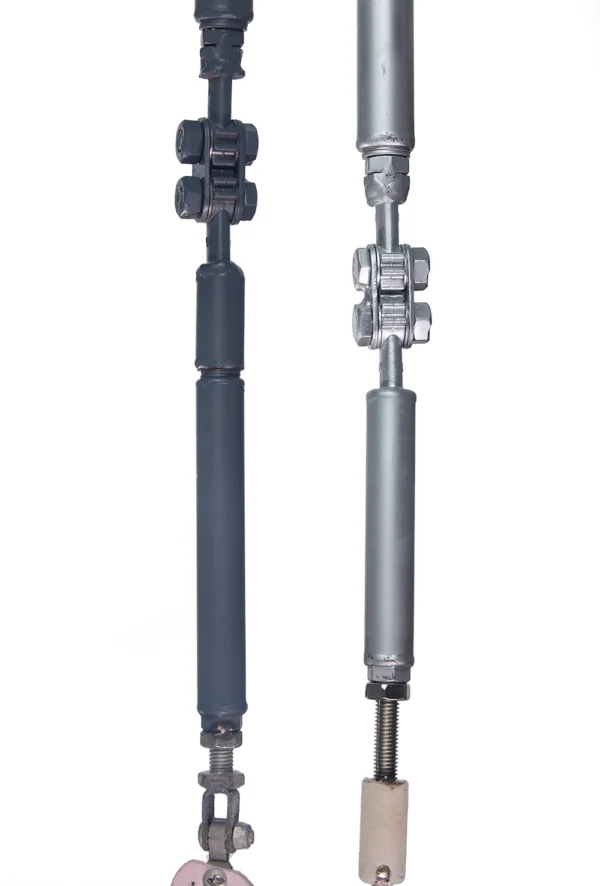
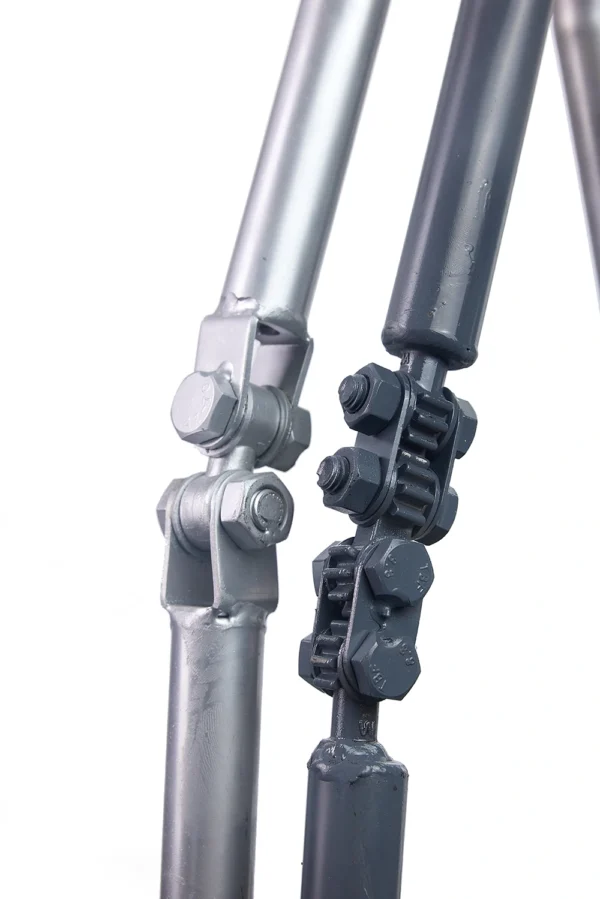
08 / Fine mechanics
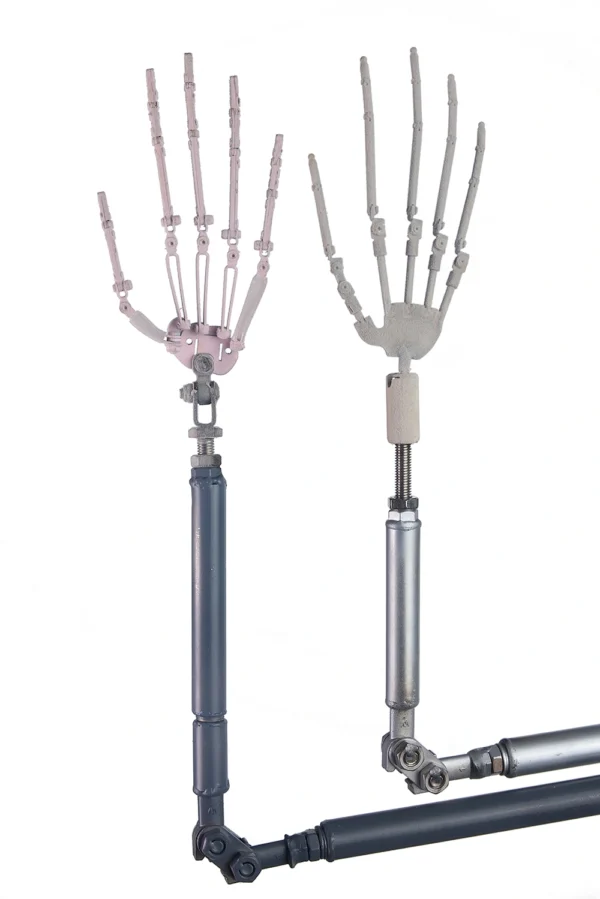
The newer hand system uses individually articulated internal finger structures and a revised wrist connection to support more controlled finger and hand positions.
More complex finger mechanics improve pose control but introduce finer internal components, so deliberate, gentle adjustment remains important.
09 / Lower-body mechanics
The documented foot structure adds ankle rotation and vertical movement, a flexing arch and articulated toe bones. It represents a change from the earlier rigid plate-style foot shown in Starpery’s comparison material.
10 / Surface engineering
Starpery describes RST as a surface-detail process that combines high-precision 3D scanning with sculptural refinement. The resulting silicone surface can reproduce pores, creases, folds and natural variation across different parts of a body sculpt.
The technology concerns visual and tactile surface detail rather than the body’s internal skeleton or weight-reduction generation. Its presence should be confirmed on the specific model under consideration.
11 / Facial construction
Starpery states that its hard and soft heads are both made from silicone. Their differences concern firmness, compatible hair treatments and functional construction rather than a change of material.
A firmer silicone construction that supports detailed surface finishing and implanted-hair options on compatible heads.
A softer silicone format generally paired with wigs. Current compatibility and hair choices vary by head sculpt.
A selected-head option with a movable jaw and more developed internal mouth construction. Availability is not universal across the catalogue.
12 / Configuration depth
The available choices depend on the body material, head type and current product listing. This selection represents common categories rather than a universal specification.
Skin tone and body painting
Eye colour and movable-eye choices
Wigs or compatible implanted hair
Nail and toenail finishes
Wire, articulated or hard-hand formats
Standing feet with or without visible bolts
Solid or gel-filled areas on selected bodies
Compatible head-and-body combinations
13 / Buyer note
A current listing may combine a finger skeleton, standing hard feet, gel-filled areas, body texture and a newer weight-reduction generation, but that combination cannot be assumed for every body or head. Confirm each selected option and its compatibility before ordering.
14 / Editorial view
An evolving family of internal body structures, with current 4.2 references limited to selected models.
Visible mechanical development across major joints, hands and feet.
RST adds scanned and sculpted pores, creases, folds and variation to compatible silicone bodies.
Multiple head, material, filling, standing and finishing choices across the catalogue.
15 / Curated catalogue
Read the independent model profiles or browse the current Starpery collection at Moon-Doll.

Full Silicone · 160 cm · K-Cup

Full Silicone · 169 cm · C-Cup
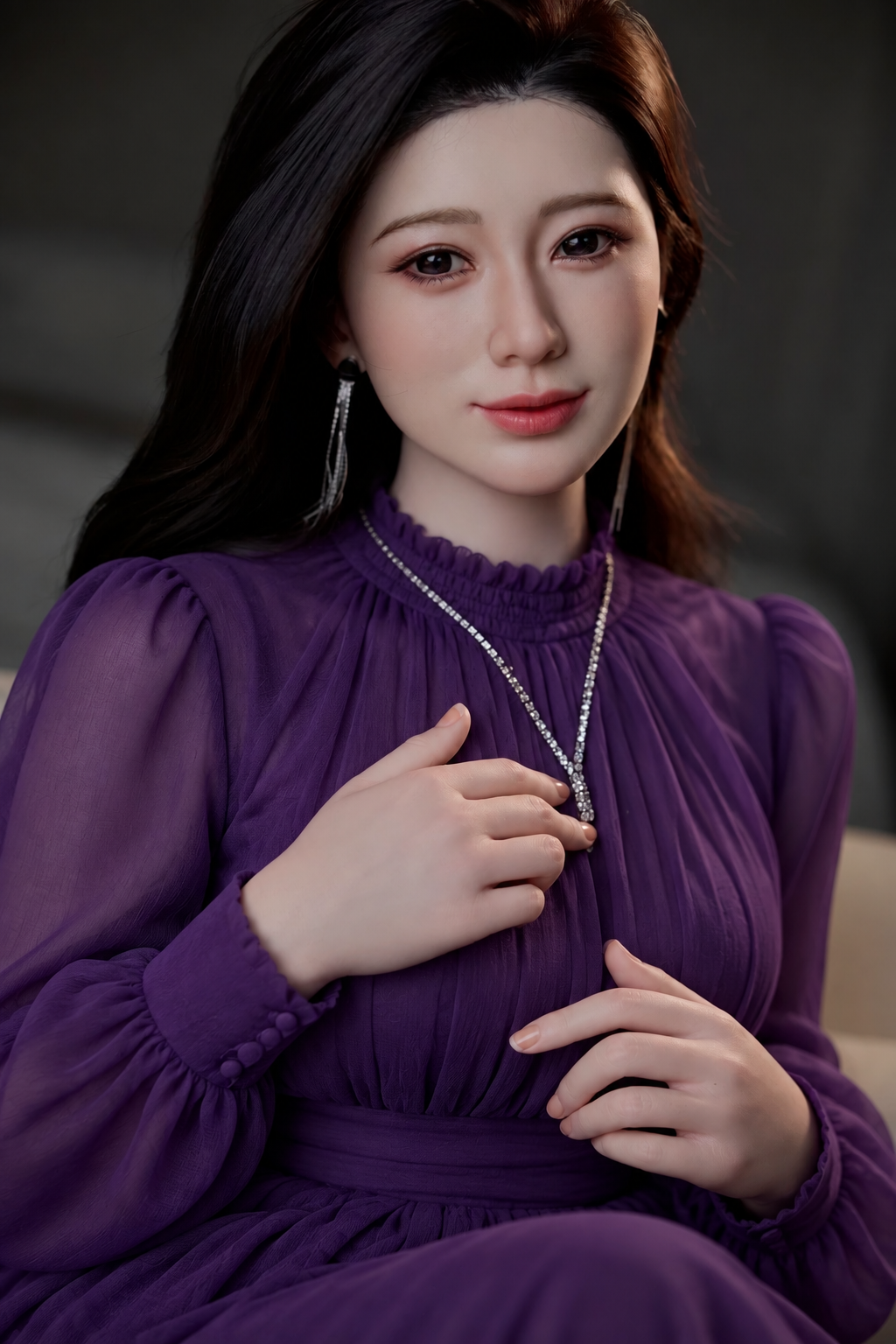
Full Silicone · 168 cm · H-Cup

Full Silicone · 171 cm · D-Cup
Moon-Doll partner offer
Browse the current Starpery catalog, body configurations and available options.
MOONDOLLCOREAffiliate link. We may earn a commission from qualifying purchases at no additional cost to you.
This independent editorial profile is not an official Starpery or Moon-Doll page. Product options and compatibility can change; confirm the selected body, head, material, skeleton and weight-reduction specification with the retailer before purchasing.